
A clump of soil in a dish of water
There’s a moment in a soil lab in Slovakia I keep returning to, and it’s almost nothing to look at: a few pea-sized crumbs of dried earth tipped into a clear dish of water, a phone propped a hand’s width above, and then you simply watch. One crumb holds — it darkens, swells a little, settles, stays itself.
The other lets go within seconds, sighing apart into a slow cloud of silt that clouds the whole dish as it sinks.
No numbers yet, no jargon, nothing to argue with — two pieces of the same brown earth and the very different thing each one chooses to do in water.
That small piece of theatre, the slake test, was the part of the trip I enjoyed most, and the longer I sit with it the more it seems to hold everything else I saw that week.
I was in Slovakia this October 2026, as part of GreenRoots — a knowledge exchange between soil practitioners that Terranima leads, supported by Erasmus+ and the European Union — travelling with Marco from SEQ and Karolina from BROZ.
That first morning, in the university’s soil department, Alexandra Obdržalková walked us through her research on soil aggregates (more details at the bottom of the article) — the crumb structure that quietly decides almost everything, whether rain sinks in or runs off down the slope, whether a root finds air or drowns — and she reads that structure two ways: with Slakes, a free little smartphone app from the Soil Health Institute that films the crumbs breaking apart and turns it into a number, and with a newer, more exacting system built by a French scientist that tracks the same unravelling across a whole sample, grain by grain.
What stayed with me, though, wasn’t the instrument so much as the case for it.
A farmer doesn’t need to believe you about the life in his soil; he needs to see it — and set a tired crumb and a living crumb side by side in two dishes of water, and suddenly the conversation isn’t yours anymore, it’s his, visual and immediate and impossible to wave away.
We talked about chromatography too, that other, older way of coaxing the hidden life of soil out onto a sheet of paper in rings and colour, and Alessandra, the professor who hosted us, leaned in and wanted to know more — and there’s something quietly hopeful in that, a scientist curious about a practitioner’s method, a bridge built from both ends at once.
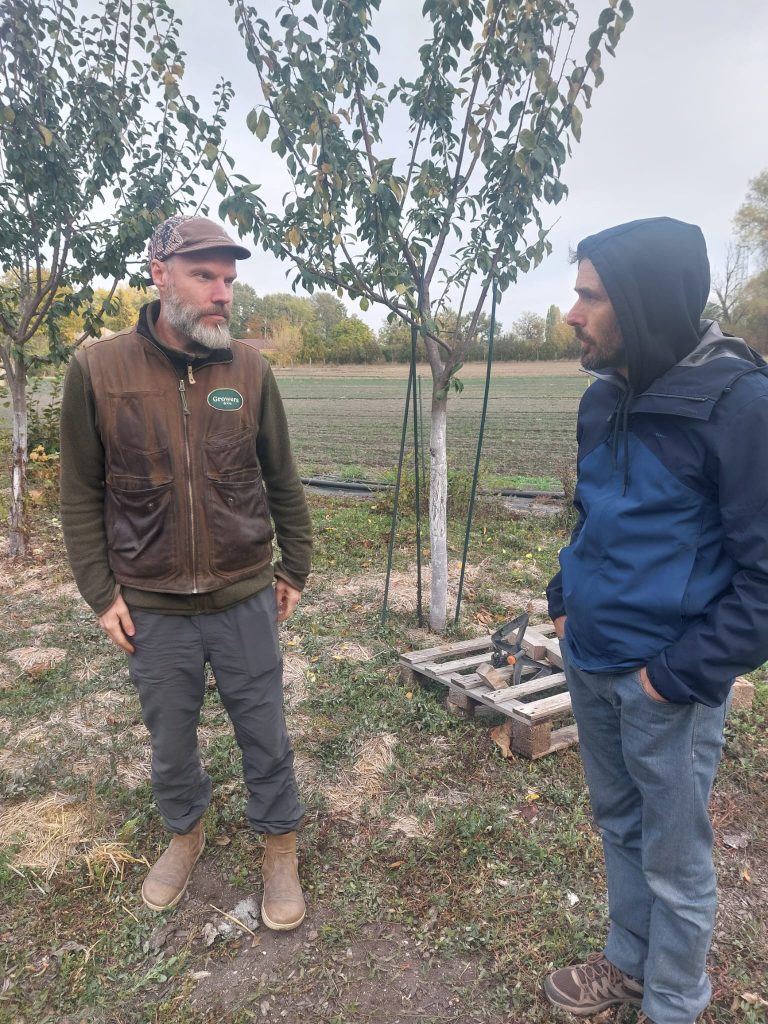
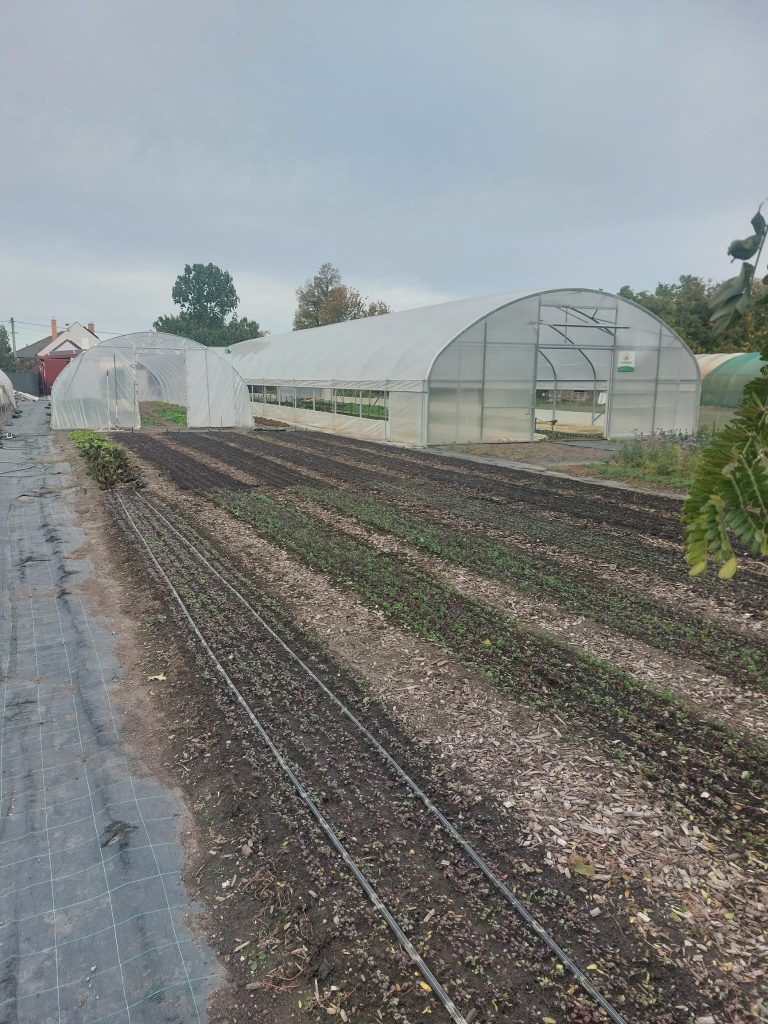
In the afternoon we drove south, almost to the Hungarian border, to Dreamfarm, a no-dig organic market garden on the Danube’s Rye Island, growing vegetables since 2019 on the conviction that good food comes from biodiversity and living soil, not from weeding and digging — where the grower who received us was proud of his work and a little guarded with us at first, until I asked him the one question that always opens that door — who inspires you? — and at the names he loves, Jean-Martin Fortier, Richard Perkins, something in him unclenched and he started telling us the real story. On the drive back to Bratislava, Marco told me that question had been the key, and I’ve been at this long enough now to know it travels everywhere: before a farmer will show you his soil, he shows you who he trusts.
The next day took us out to the Danube, where the river itself draws the border with Hungary.
We climbed into a cart behind two heavy, patient Hucul horses and rolled out to a river island that BROZ has spent years coaxing back to life — reopening the old channel the river had lost, calling back the native plants and animals after a dam had half-drowned the place — and there were storks, and horses, and a pen of unbothered donkeys we stood with a while, and that clean autumn cold that makes you glad to be outside.
And then the river: lower than anyone standing there had ever seen it, so thin you could almost have waded across to Hungary, the long drought of this whole year written plainly into the mud. You can argue about climate change across a conference table. You cannot argue with a Danube that thin.
From the island we drove on to another corner of the same effort, where the restoration was being done on four legs. On a stretch of ground where non-native plants had been slowly crowding out the local flora — shouldering aside the rare, particular species that give this landscape its real ecological worth — a flock of goats and sheep had been set loose to graze the invaders back. No machinery, no herbicide: just animals, moving steadily across the slope, eating their way through the problem and opening light and room for the native plants to find their way home. I found it quietly moving to watch — a problem answered with appetite instead of effort, an old and patient arrangement between grazing animals and grassland simply pointed at a modern imbalance.
It was the same lesson as the two dishes of water, in the end: give living things the right conditions and they’ll do the work better than we ever could, and more cheaply, and with more grace.
Over tea afterwards in a nearby village, Katka from BROZ told us about one of their quietest, best ideas — gathering farmers into a network where they simply trade what they know, hand to hand, experience passed from one to the next — and it struck me that this was the same instinct running under everything that week: under GreenRoots, under the two dishes of water, under the question about who you admire. Soil regeneration isn’t really a technology, in the end. It’s a conversation — between a scientist and a farmer, between a farmer and his neighbour, between all of us and a landscape that is telling us, as plainly as it knows how, what it needs.
My thanks to Marco and SEQ, to Karolina, Katka and all of BROZ, and to everyone who welcomed us so warmly — and to the Erasmus+ programme and the European Union, which make these slow, border-crossing exchanges possible, this patient human work of carrying knowledge from one pair of hands to the next, one dish of water at a time. And the door stays open, as always, to anyone who’d like to carry it a little further with us.
A closer look: the quiet importance of soil aggregates
 EN
 IT