
From our first season on the land
Our First Garden
From a bare, boar-threatened terrace to beds full of tomatoes, courgettes and Fibonacci spirals — how the garden at Badolato began.
Our first big project on the land was a garden. It was 2020, and with the uncertainty the pandemic had brought, we decided a slightly oversized vegetable garden wouldn’t be a mistake — something that could feed six people or more, in case self-sufficiency arrived sooner than we’d planned.
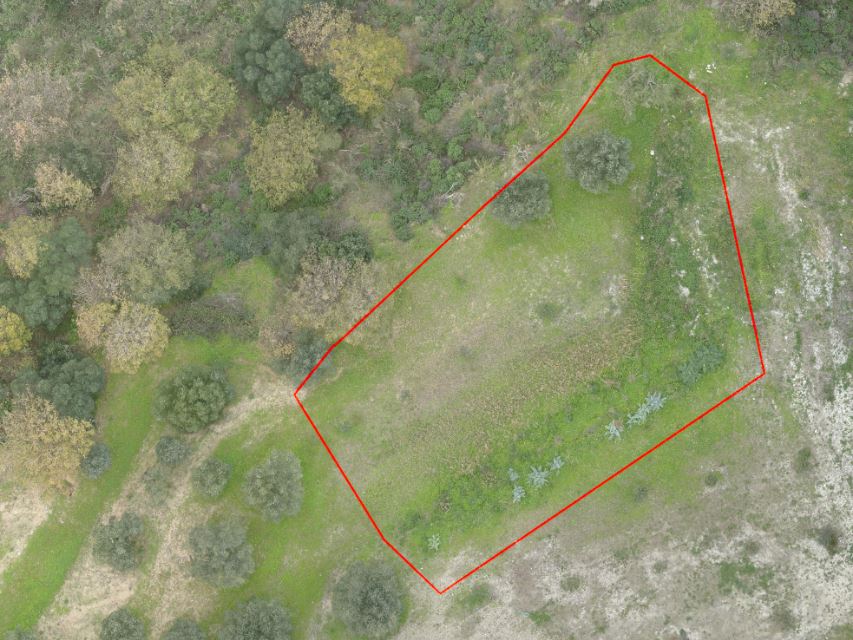
We chose a sunny 500 m² terrace that runs along the steep, forested valley-side, down toward the river 150 m below. Four small olive trees already stood on it, and rather than clear them we folded them into the design as shade. But before any of that, we needed a fence — the wild boars that roam these hills had been described to us, by nearly everyone, as a plague.
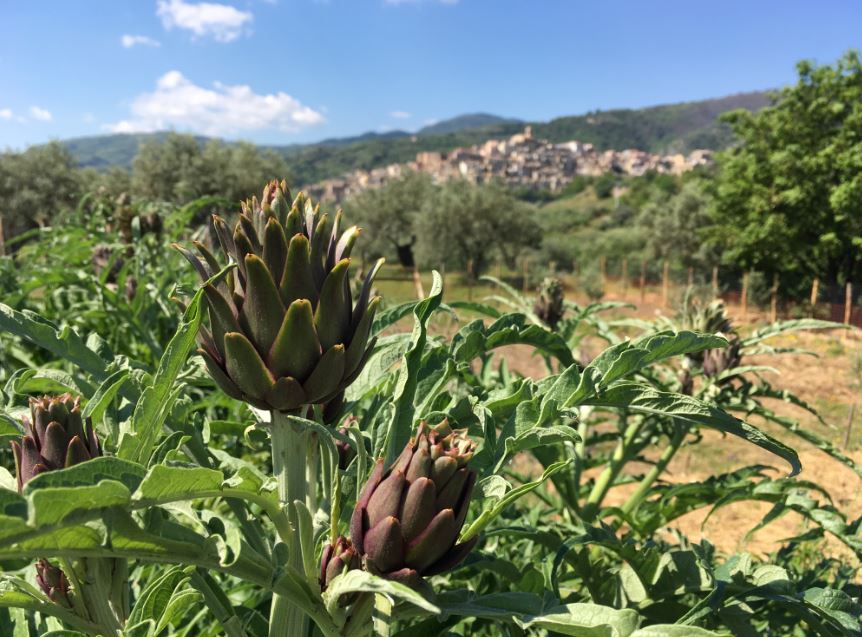
Protection against wild boars
Why so many boars? The usual answer is that the predators that once kept them in check — wolves, above all — are gone. The locals tell another story too. As the legend goes, a farmer once tethered a domestic sow and let a wild boar impregnate her; some of the offspring escaped, carrying both wild and domesticated genes. Where a true wild boar farrows once a year, these hybrids could breed up to three times, with as many as twelve young at a time.
Whichever version is true, we soon found holes torn in the older fences elsewhere on the land, and followed the trails to patches turned over by a passing troop. The damage stayed moderate — they never reached the olive roots — but the warning was clear.
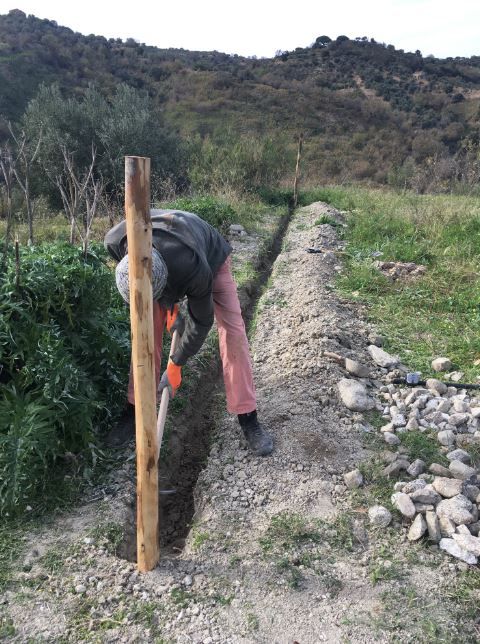
So we dug a trench, 50 cm deep and 30 cm wide, and set more than a hundred chestnut hardwood poles into it, one metre apart, wedging granite stones around each to hold it fast.
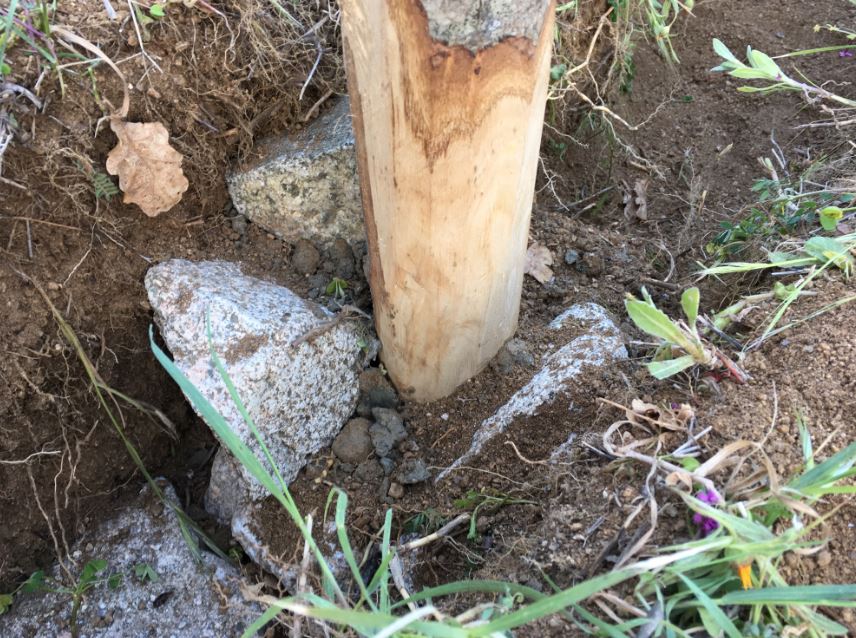
We filled the rest of the trench with more granite and rubble the previous owners had left behind. Over the 150 cm-high fence we then fixed a metre of heavy-duty steel mesh, buried about 30 cm into the ground.
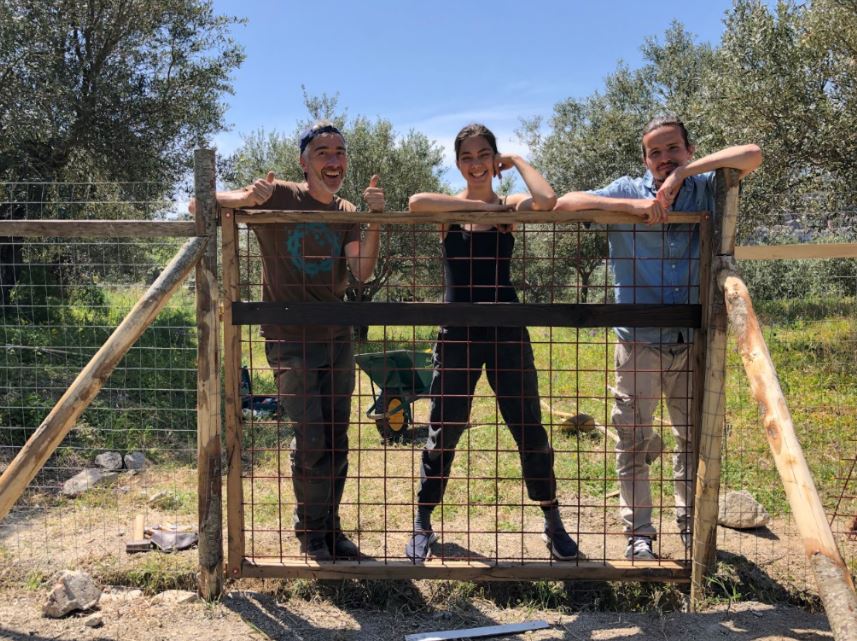
Our volunteers Angi and Joel finished the job with two well-built gates, made to shrug off any boar with a running start. After weeks of hard labour, we could finally begin the actual garden.
Preparing the beds and soil
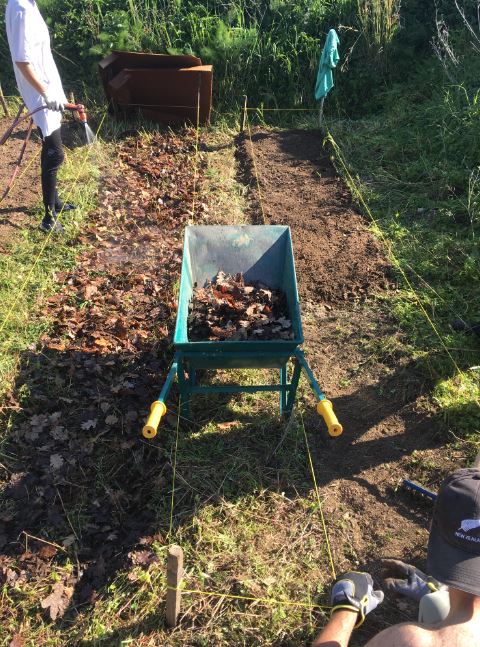
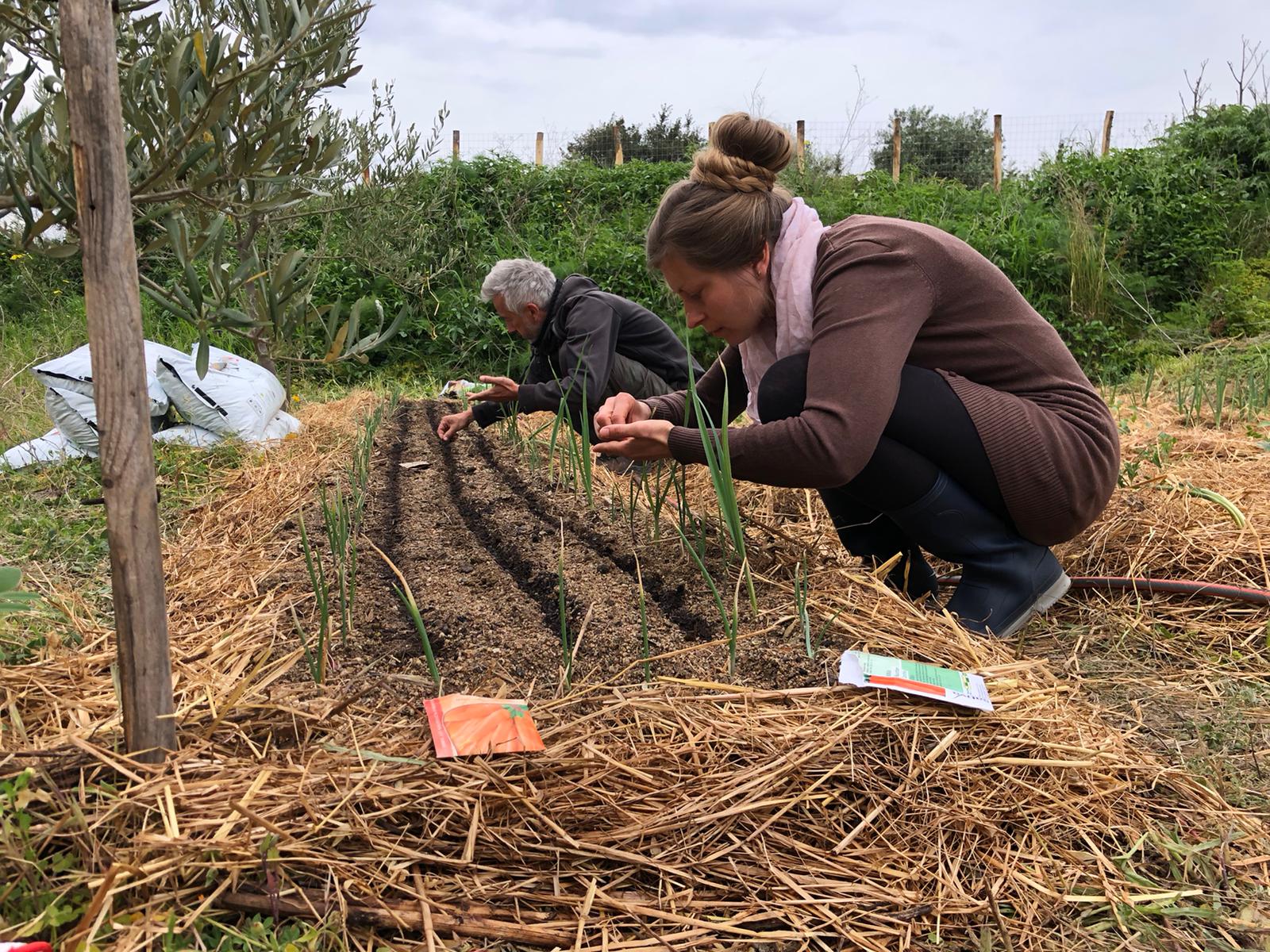
The existing soil was badly compacted, so we loosened it with digging forks. Over it went a first layer of dry leaves and cardboard to hold down the thick grass and weeds pushing up from below.
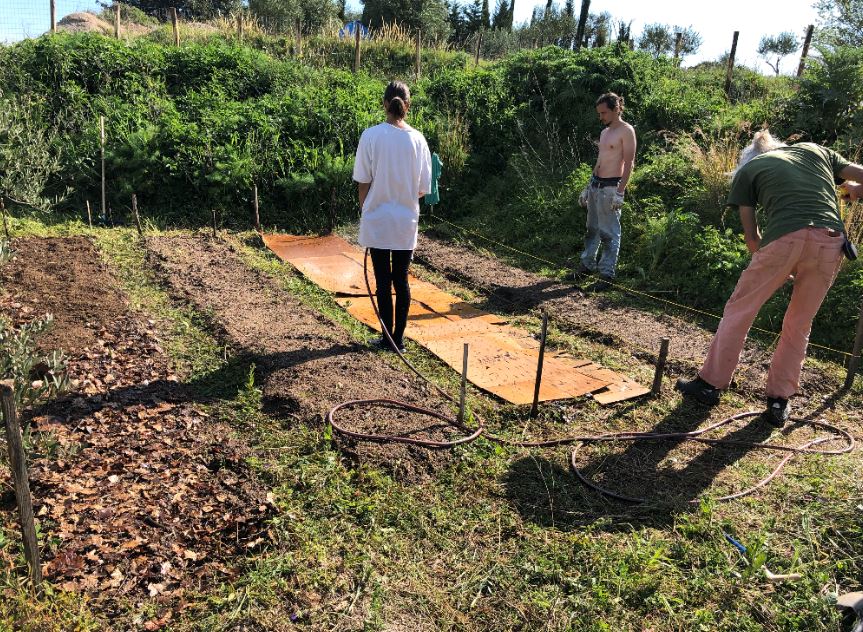
We were lucky to salvage a few cubic metres of old, supposedly fertile soil from a ruin in town, where a great fig tree had been growing for decades. We topped the beds with a 10 cm layer of this mix — adding some old chicken manure we’d found in a barrel, by then almost fully broken down to soil — then watered everything well to moisten the beds and the cardboard beneath.
The fun begins
Now the good part: planting. Soon after arriving we’d germinated a wide variety of seeds, in season or not — many of them brought with us, with no idea whether they’d take to the far hotter southern climate.
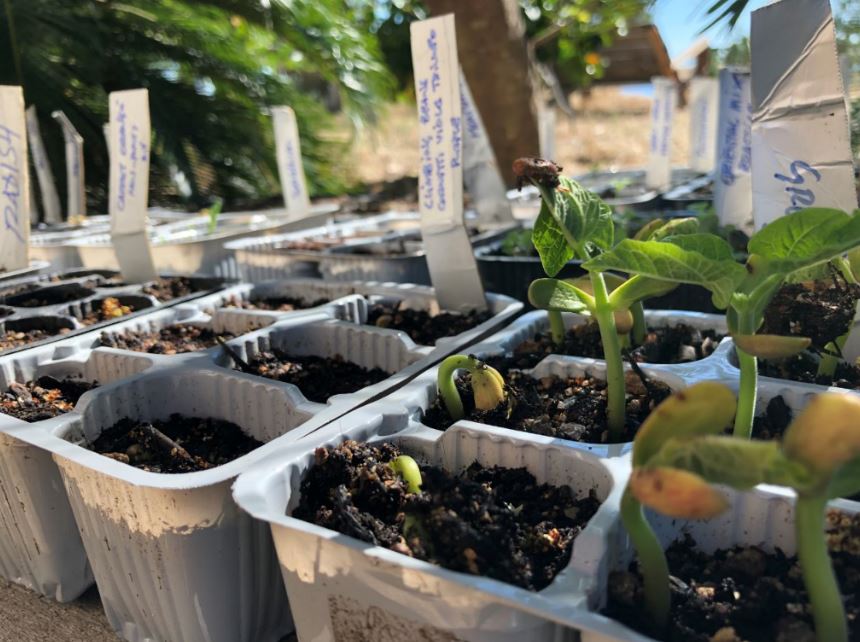
In went tomatoes, basil, peppers, pumpkins, courgettes, cucumbers, strawberries, leeks, lettuces, onions, carrots, broccoli (out of season, as it turned out — it grew like mad and bolted straight to seed), beans, beetroot, chard, corn, and more to follow as new beds were ready. Our volunteer Diego built us a broad fork that loosens the soil with your whole body rather than just your hands.
We mulched around every seedling to slow evaporation and weeds. May was no time to find fresh straw, so we used what was left from the year before — much of it rained-on — and some mouldy bits must have slipped in, because a few beds sulked for weeks. Only once we’d stripped that mulch away, or swapped it for our own wood chips, did they suddenly come alive.
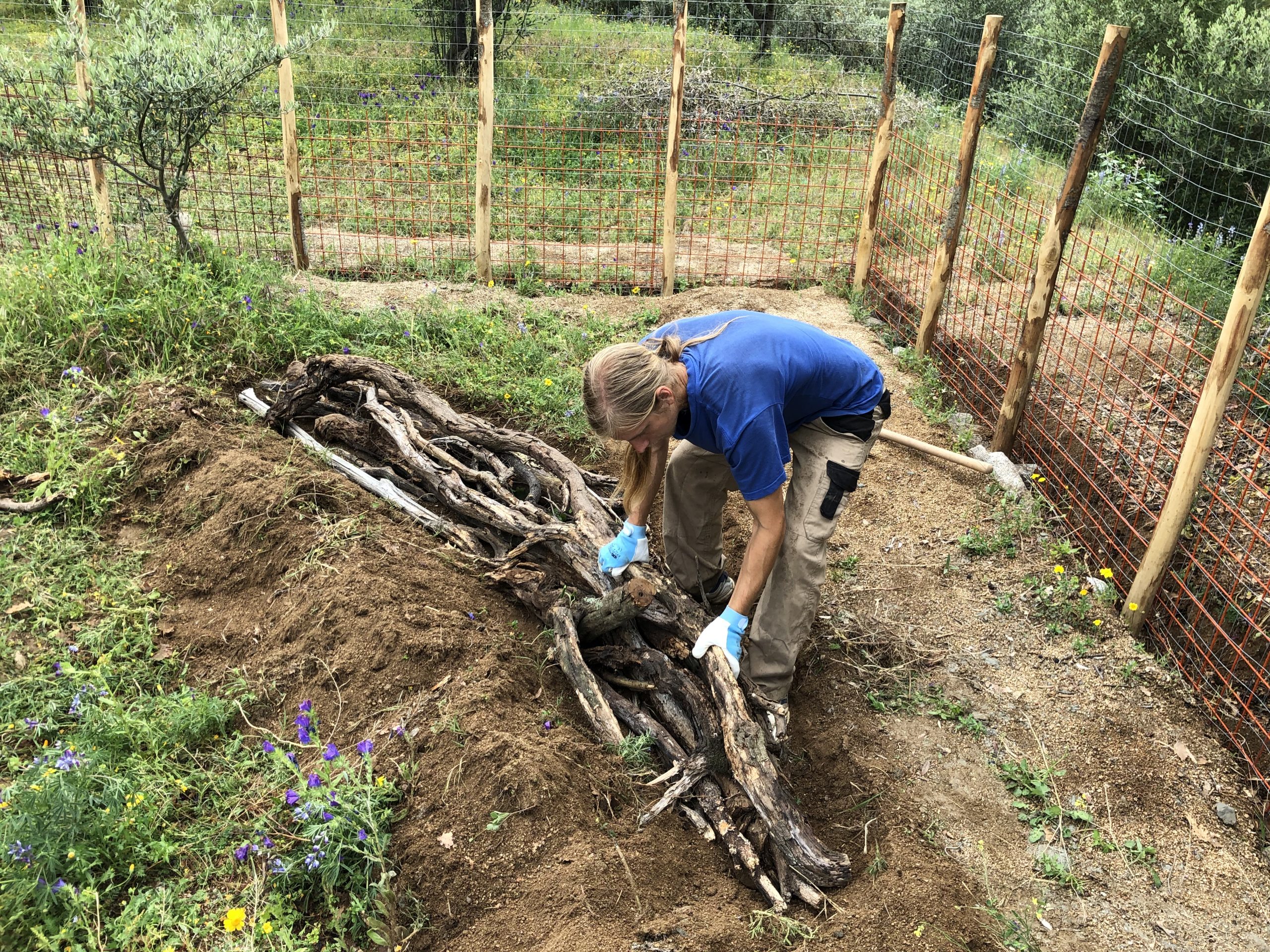
Later we added more organically shaped beds: a spiral built to a Fibonacci ratio, two keyhole beds, and a hügelkultur mound in the shape of a gecko. For the little we put in, most beds gave a good yield — and for a first spring and summer, we were more than happy with how it all came on.
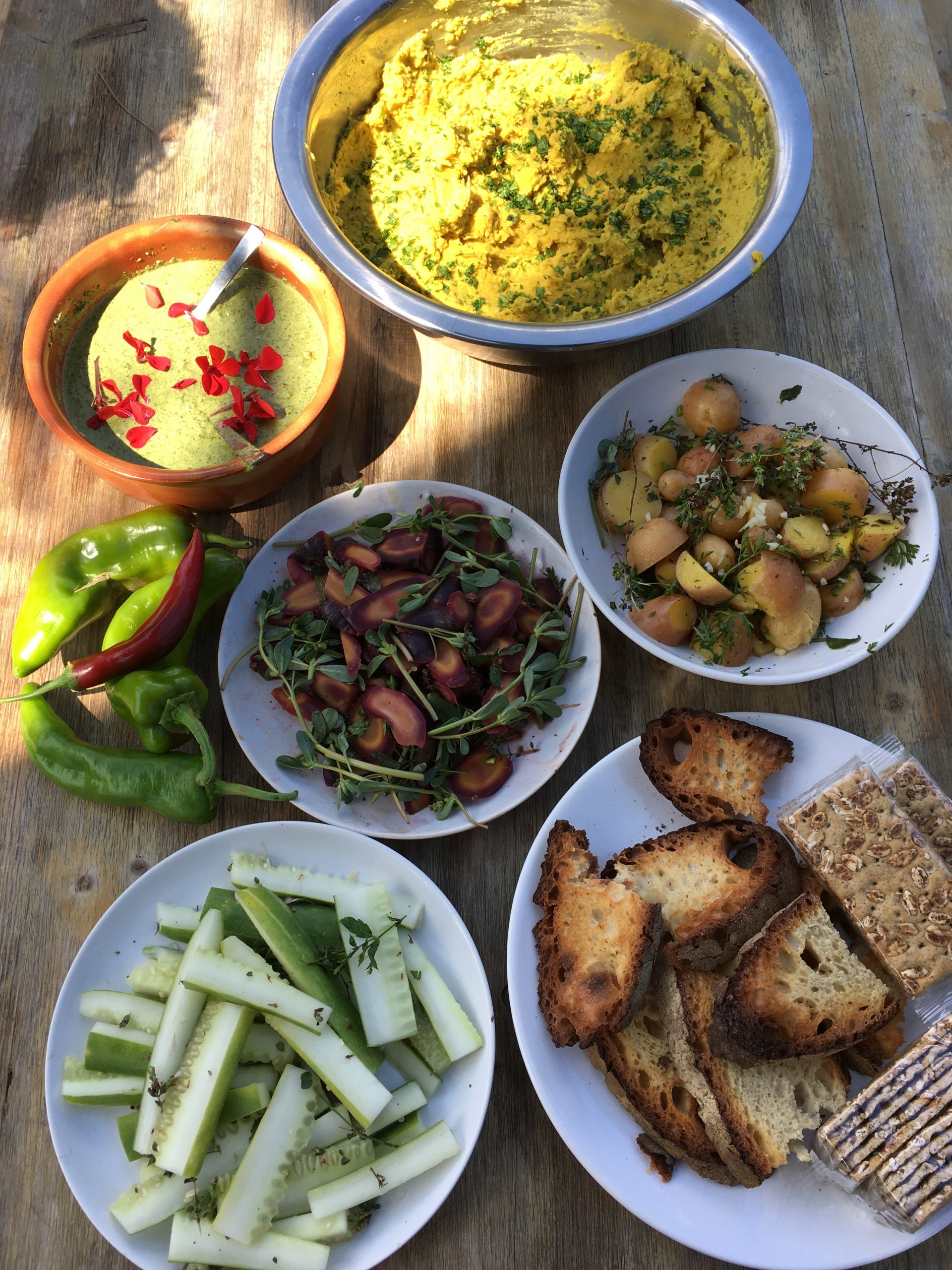
Thanks to Yvonne’s extraordinary cooking, we ate our way through countless wonderful vegan meals — a luxury that kept the rest of us fed, happy and free to focus on the work. Thank you, Yvonne, for the love you brought to this place. And we won’t forget Markus’s raw cakes, easily the equal of any five-star kitchen — thank you too, Markus, gifted cake-maker and builder of useful things, vermicompost bins included.
The small house garden
We also made a small garden by the house, running along and beneath a pergola shaggy with grapevine. Inside its fence we kept the lemon, loquat, plum and fig trees that were already there.
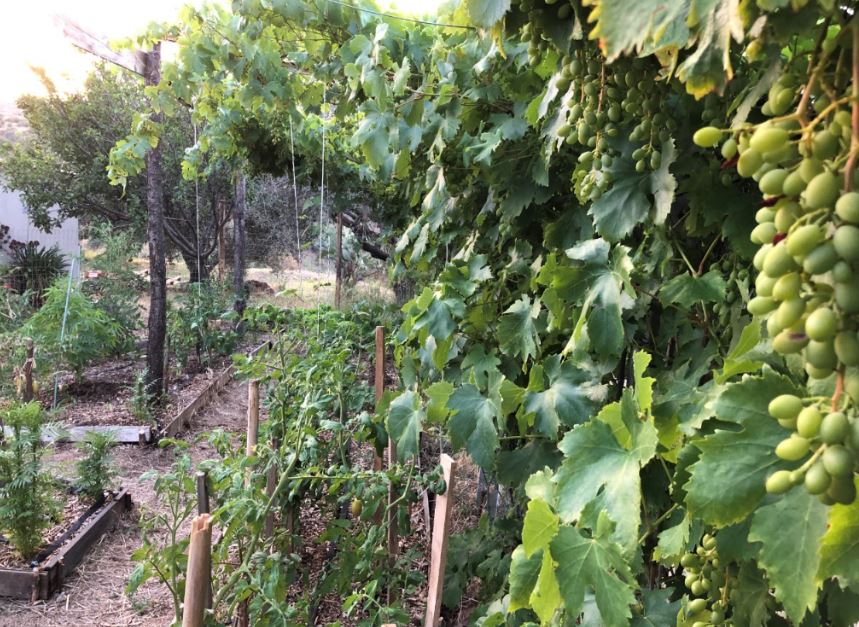
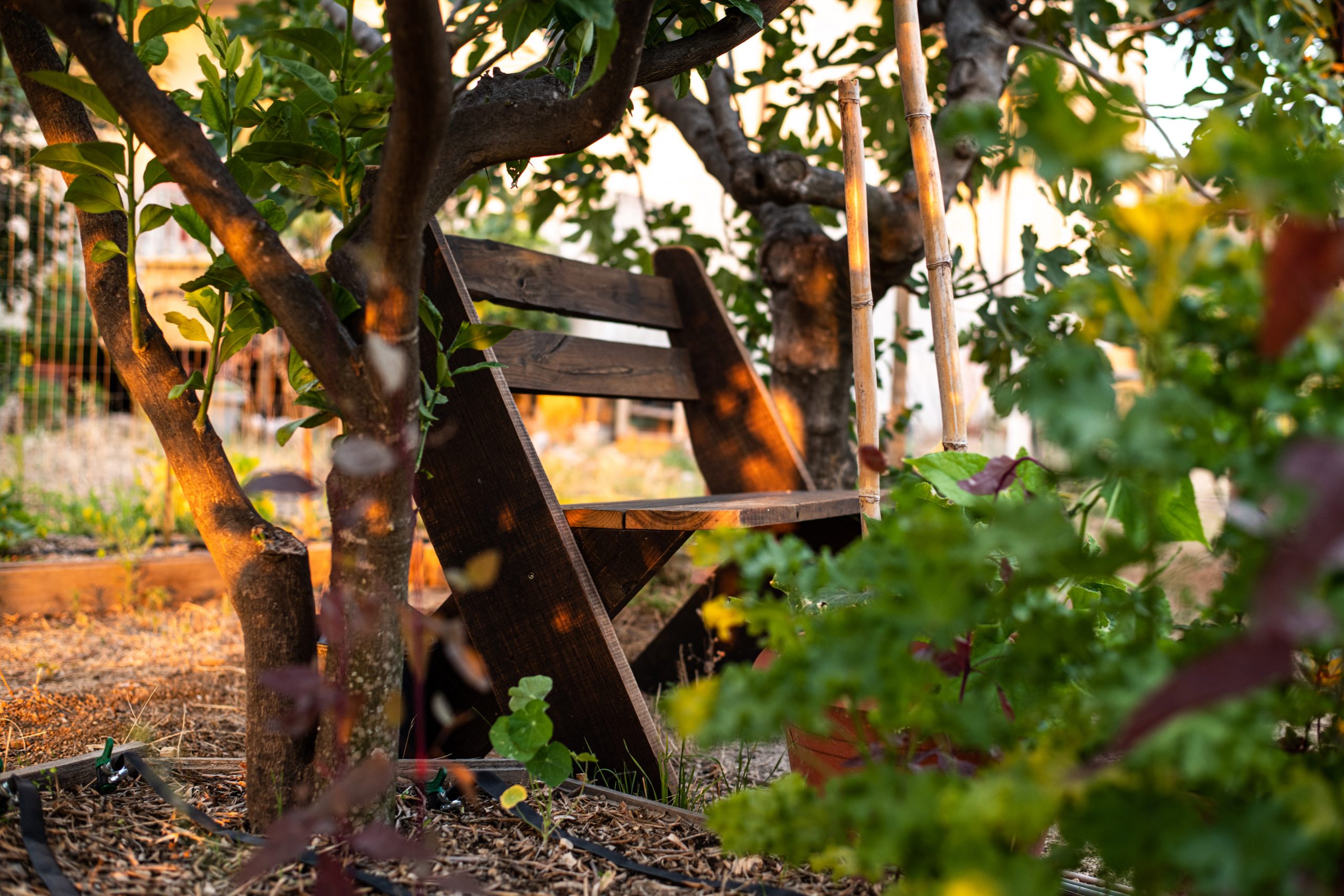
With the irrigation reaching them from the surrounding garden, these trees should fruit far more heavily over the years; in return, they shade the plants below from the harshest sun. The little wooden bench Mario and Markus built invites anyone to pause among the flowers and greenery.
If you’d like to follow where this garden — and everything that grew from it — has gone since, join our community and our newsletter.

 EN
EN  IT
IT